
Beyond Methods: What TUTOR-PHC taught me about Interdisciplinary Research, Leadership and Impact
10 February 2026
Rosina Cross, one of our SPCR Trainees, reflects on her TUTOR-PHC programme visit based at Western University in Canada.

 |
DR ROSINA CROSSPostdoctoral Research Fellow University of Exeter
|
Joining TUTOR-PHC, I expected rigorous training in primary health care research. What I hadn’t fully appreciated was how transformative the programme would be, not just in terms of my research skills, but for how I think about interdisciplinarity, leadership and my future as an independent researcher.
As an NIHR SPCR-funded Postdoctoral Research Fellow, working between of physical activity, behavioural medicine and primary care, my work is inherently complex. It spans disciplines, settings, and stakeholder groups. TUTOR-PHC offered something rare, protected time and structure space to sit with that complexity, rather than simplify it away.
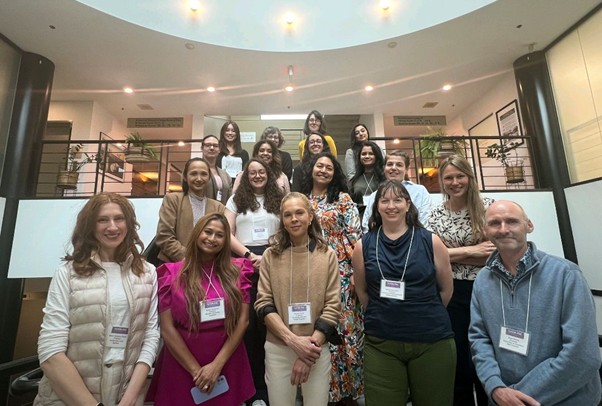
Learning to work between disciplines, not just alongside them
One of the most valuable aspects of TUTOR-PHC has been its commitment to true interdisciplinarity. Rather than positioning disciplines as parallel contributors, the programme actively encourages participants to interrogate assumptions, language and methods across fields. Working alongside trainees and mentors from primary care, psychology, sociology, public health and health services research and policy challenged me to articulate my work more clearly. I became more confident explaining behavioural science and physical activity research approaches to colleagues outside of my field, while also learning when not to default to my own disciplinary lens. I now think much more deliberately about who knowledge is for, how it moves into practice and what structures enable or constrain real-word impact.
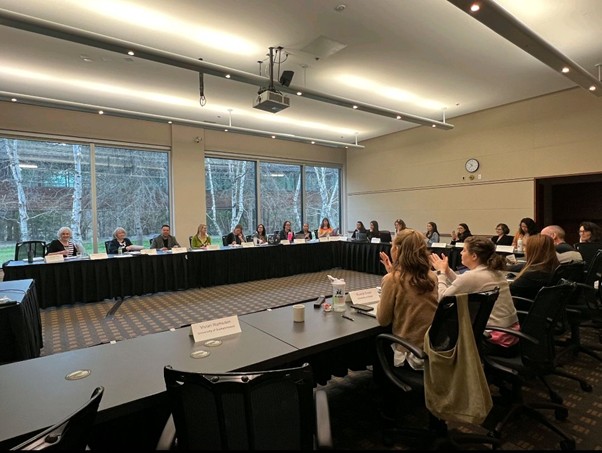
Learning from a global cohort
A defining strength of TUTOR-PHC has been learning alongside a globally diverse cohort from Brazil, the Netherlands, New Zealand, Canada and Australia. While many primary care challenges; workforce pressures, health inequalities, prevention and long-term condition management, were shared, the ways different health systems respond to these challenges varied markedly. Exposure to team-based care models, community integrated prevention and alternative funding and policy approaches challenged assumptions about what works and what doesn’t in primary care. These discussions strengthened my ability to think comparatively, design context-sensitive interventions, and situate my research within an international primary care landscape, skills that are essential for impact, scalable research and future international collaboration.
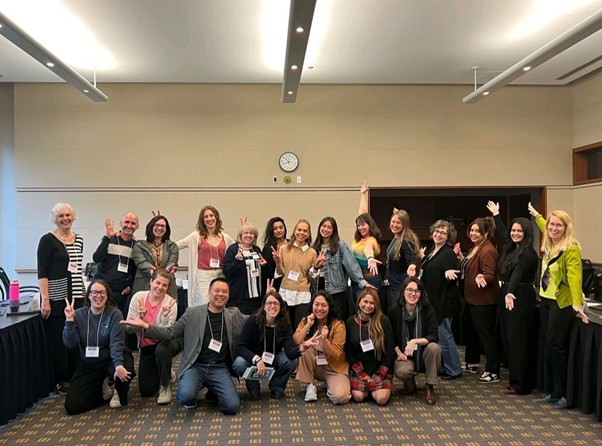
Leadership, confidence and finding my voice
Perhaps unexpectedly, one of the most meaningful outcomes of the TUTOR-PHC programme has been personal. As an early career researcher stepping into more visible leadership roles, I’ve sometimes wrestled with belonging. TUTOR-PHC created an environment where that conversation felt normal and supported. Learning from senior mentors who were open about their career paths, and missteps, helped me reframe leadership as something that evolves, rather than something you either have or don’t. I leave the programme more confident in my ability to lead collaborative research and to mentor others.
Looking ahead
TUTOR-PHC has strengthened my ambition to build a physical-activity focused research hub within primary care, one that is interdisciplinary, methodologically robust and grounded in real-world need. Alongside this TUTOR-PHC has enabled me to establish meaningful connections with Canadian Institutions and researchers, including emerging links with the Passerelle Network and the Canadian Primary Care Research Network. These relationships have opened up opportunities for cross-country learning and comparative perspectives. I am also looking forward to returning to Canada, supported by an NIHR SPCR Travel Bursary, to work with researchers based in Kingston on the development of a potential project exploring how community-based physical activity can be more effectively embedded within routine primary care.
Most importantly, the programme has reinforced why I entered this field in the first place: to work collaboratively, think critically and contribute research that meaningfully improves how care is delivered in real-world settings. For researchers working within complex health systems, TUTOR-PHC offers not only advanced training but a platform for building lasting networks that support impactful, internationally informed research. If you’re wondering whether an interdisciplinary programme like TUTOR-PHC is for you, my answer is simple yes, and then some.
Latest news
New Accessible Film Raises Awareness of Suicide and Self-harm in People with Learning Disabilities
23 July 2026
A new accessible short film showcases scoping work led by Dr Magdalena Mikulak at Lancaster University, funded by the Three Research Schools' Mental Health Programme, exploring suicide and self-harm in people with learning disabilities.
July 2026 | NIHR SPCR Newsletter
20 July 2026
The July 2026 edition of our NIHR SPCR newsletter is out now. Sign-up to receive our monthly newsletters to stay updated about our latest news, publications and funding
SPCR-funded fellowship research highlights challenges with digital end-of-life planning
20 July 2026
A new NIHR School for Primary Care Research (SPCR) study examines the implementation of Electronic Palliative Care Coordination Systems (EPaCCS) and identifies important lessons for improving coordinated end-of-life care.